Mathematics
you can touch.
Nine strange attractors. Spatial audio. No score, no goal, no end.

iPhone, iPad, and Mac. One purchase.
No tracking. No accounts. No in-app purchases.
Playdate sold separately on Panic's Catalog.
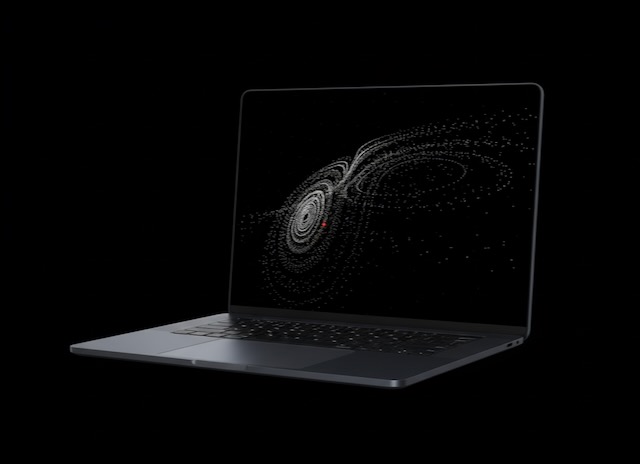
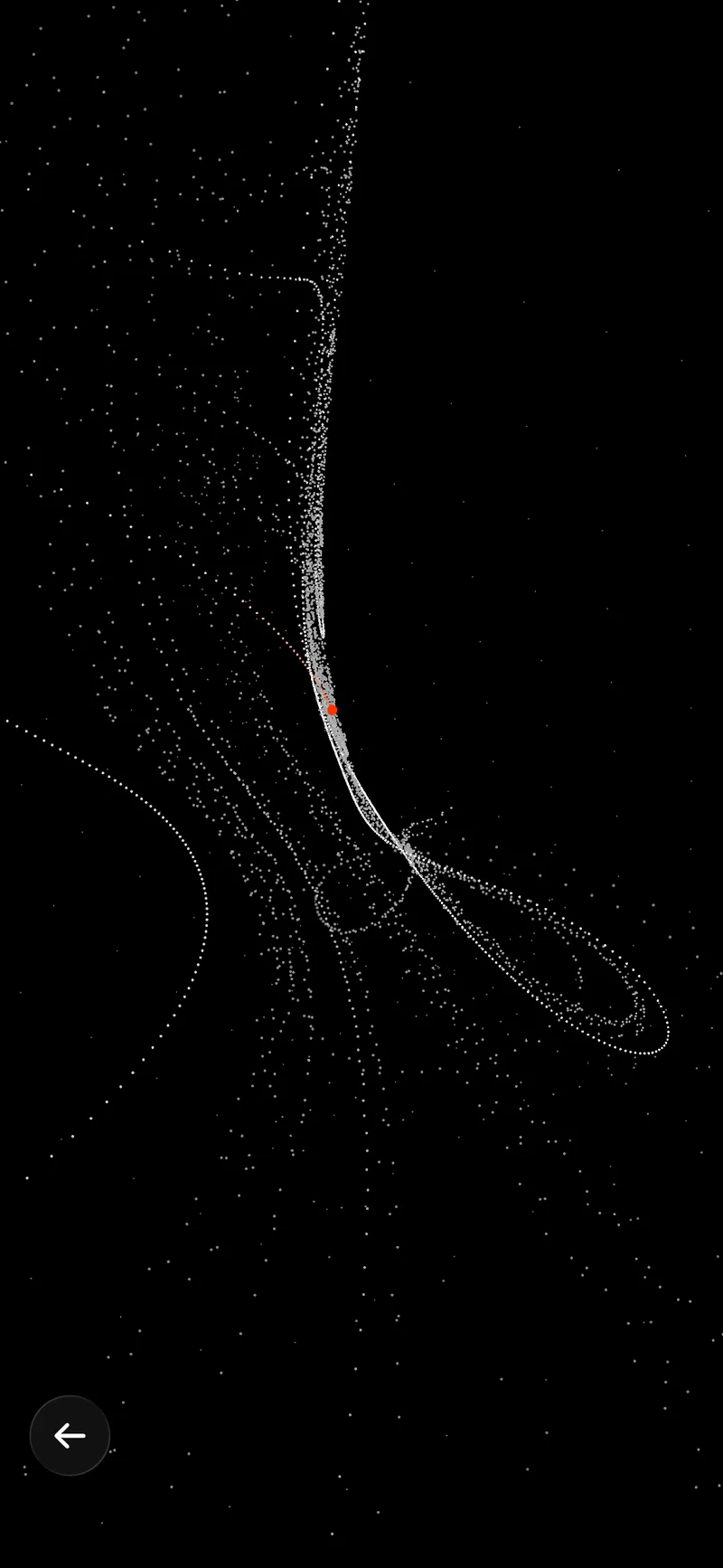
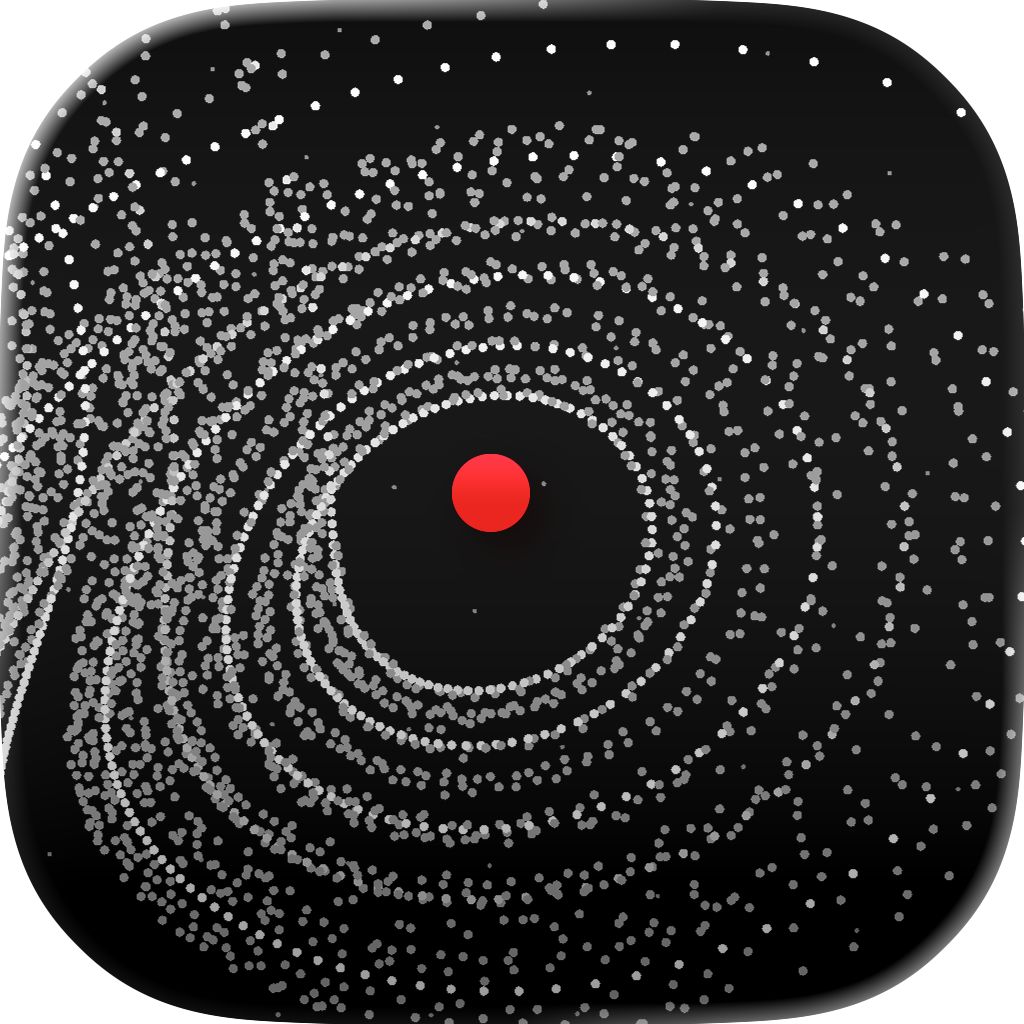
Strange attractors are shapes that exist only in motion — they never repeat and never escape. Hold them in your hands: rotate, zoom, listen. Open the app for thirty seconds between meetings, or lose ten quiet minutes watching motion unfold. Each attractor has its own shape and feel.
Attractors in Your Palm
Rotate with your thumb. Pinch to zoom. Plug in AirPods and the full soundscape comes with you. iPhone and iPad both run the same nine attractors — small enough to fit in a pocket, fast enough to open between meetings.
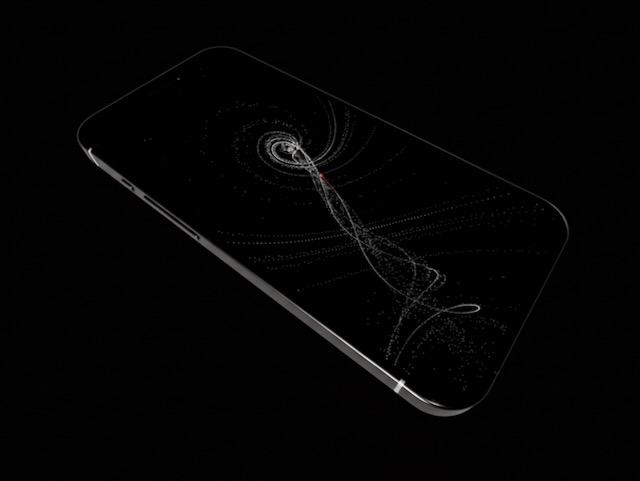
Seven Stems in 3D Space
Seven music stems positioned around you — percussion in front, cello behind, drones below. Rotate the attractor and the soundscape rotates with it. A synthesiser tracks the particle as it moves, its pitch rising and falling with speed. The sound isn't layered on top. It's part of the system. Headphones reveal the full effect.
Chaos with a Crank
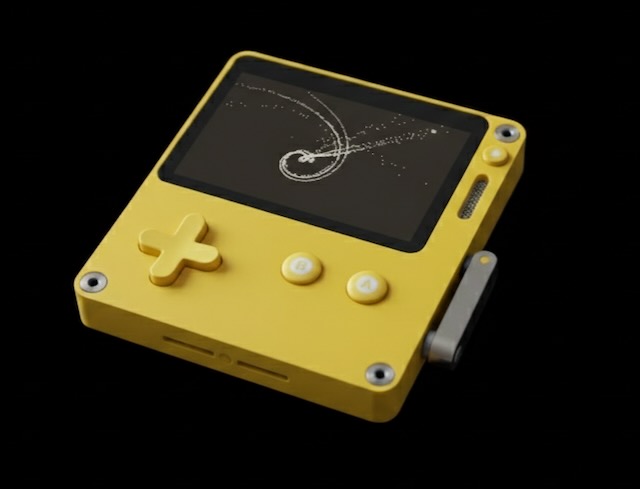
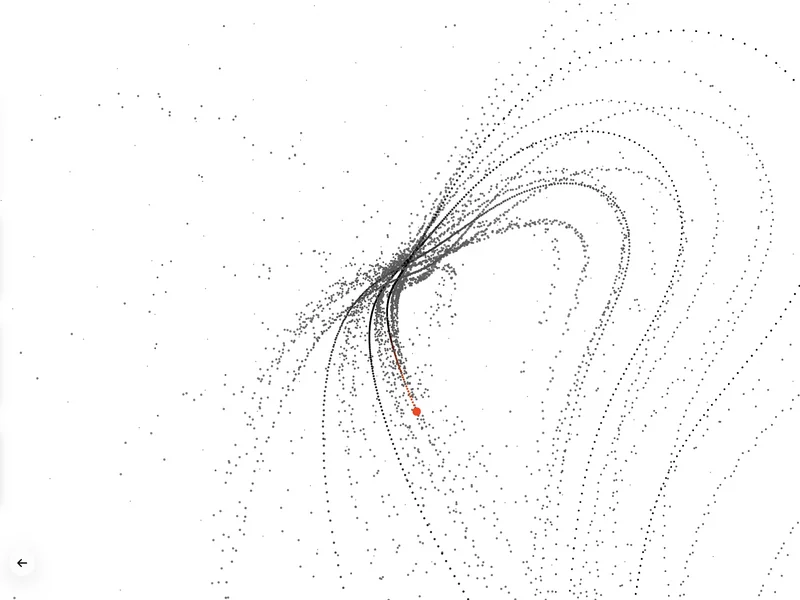
On Panic's tiny yellow handheld, the crank controls rotation. 1-bit rendering strips the attractor back to pure form — black particles on a white field. Where the phone and Mac versions offer colour and sound, the Playdate version offers something rarer: your hand on the crank, the attractor responding to you.
Nine Attractors
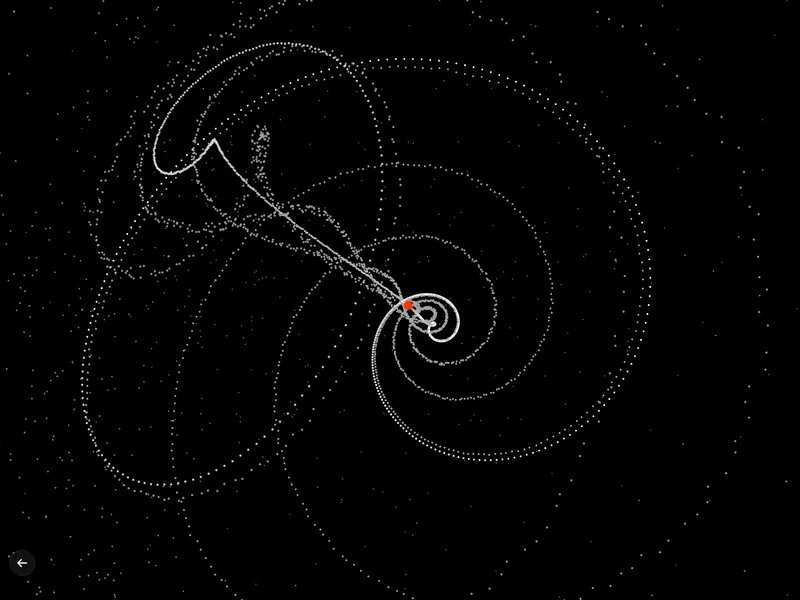
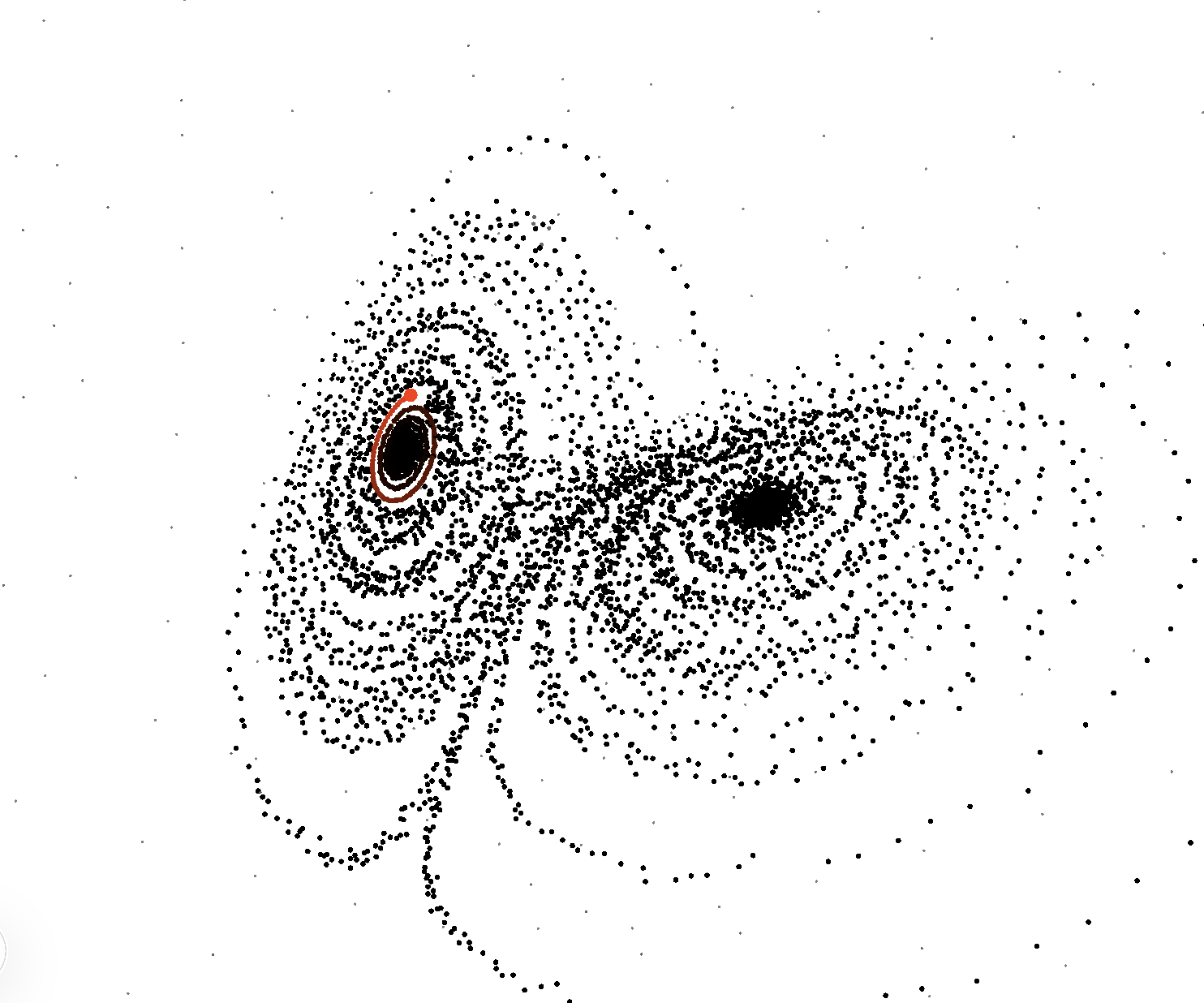
Each comes from a different set of equations and produces a distinct geometry. Some feel calm. Others feel restless. Switching between them changes the mood instantly.
Lorenz
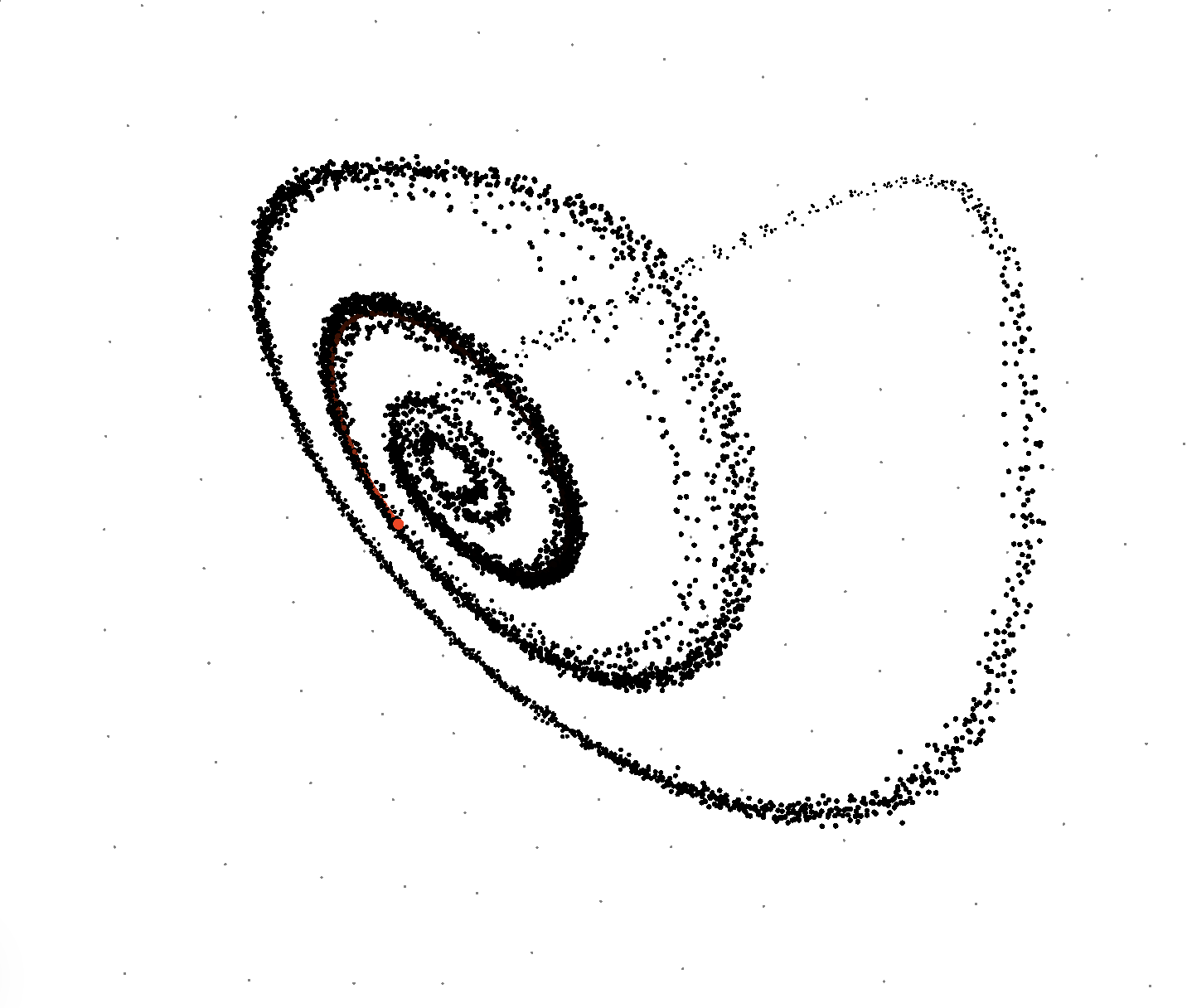
Rössler
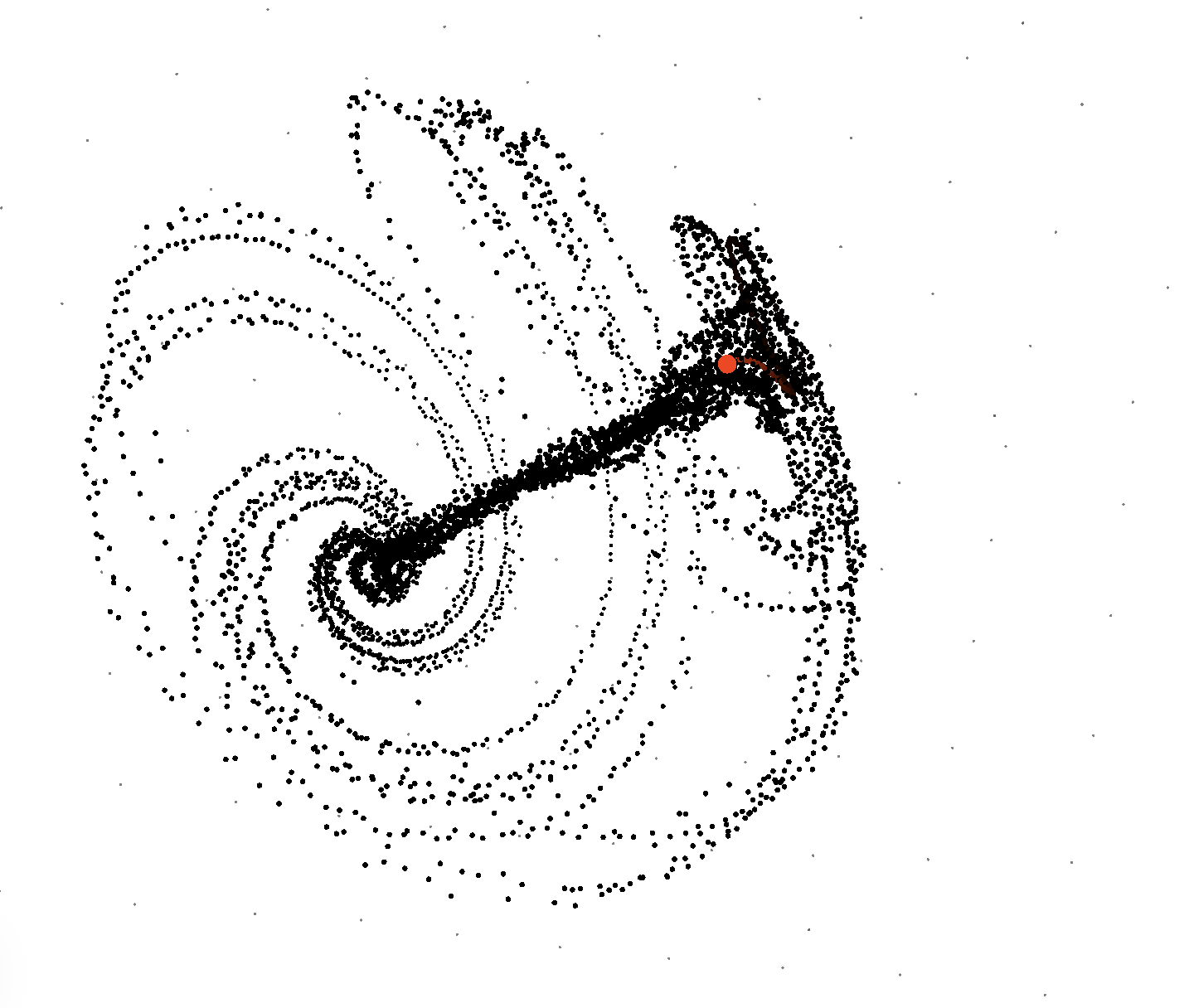
Aizawa
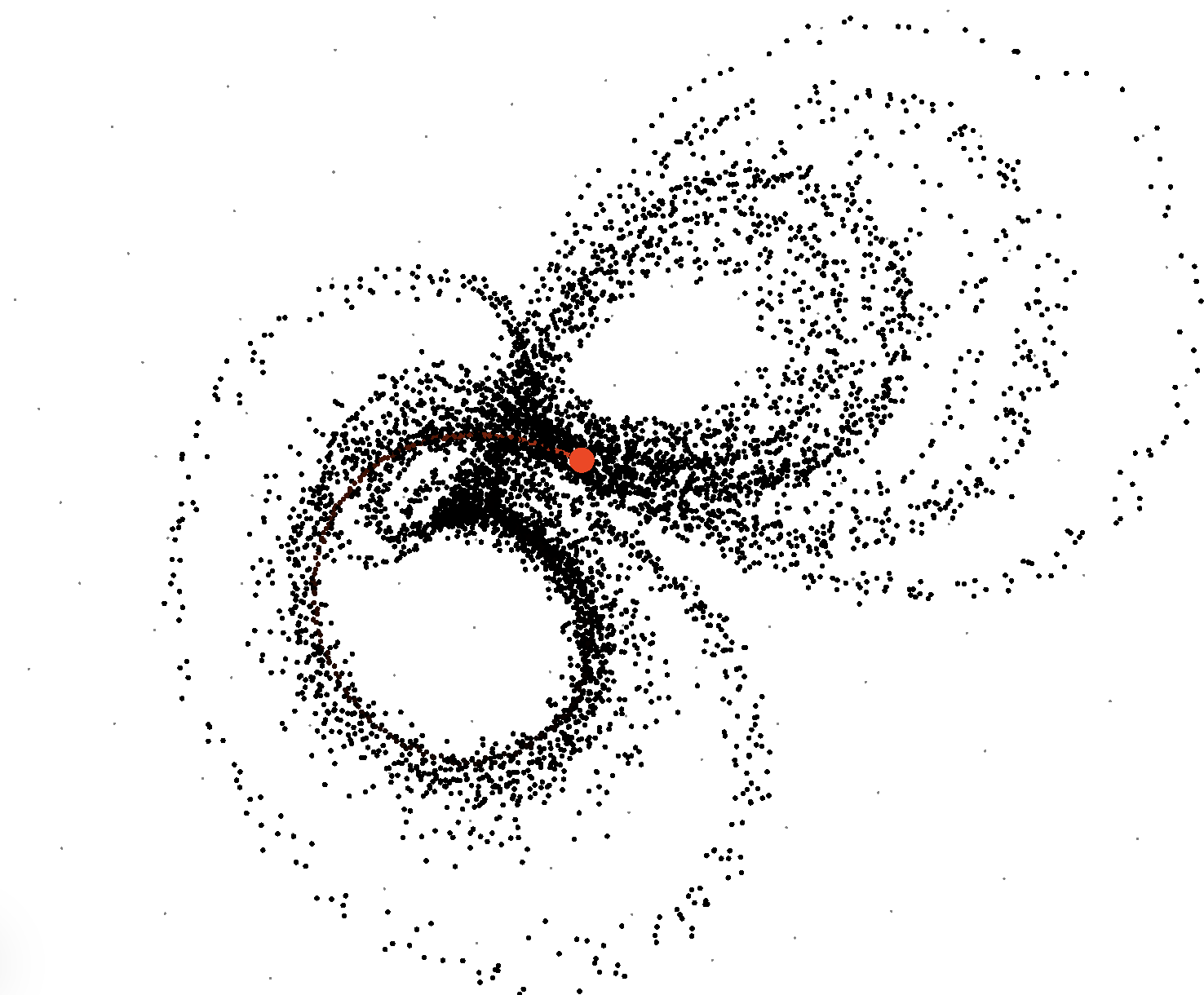
Burke-Shaw
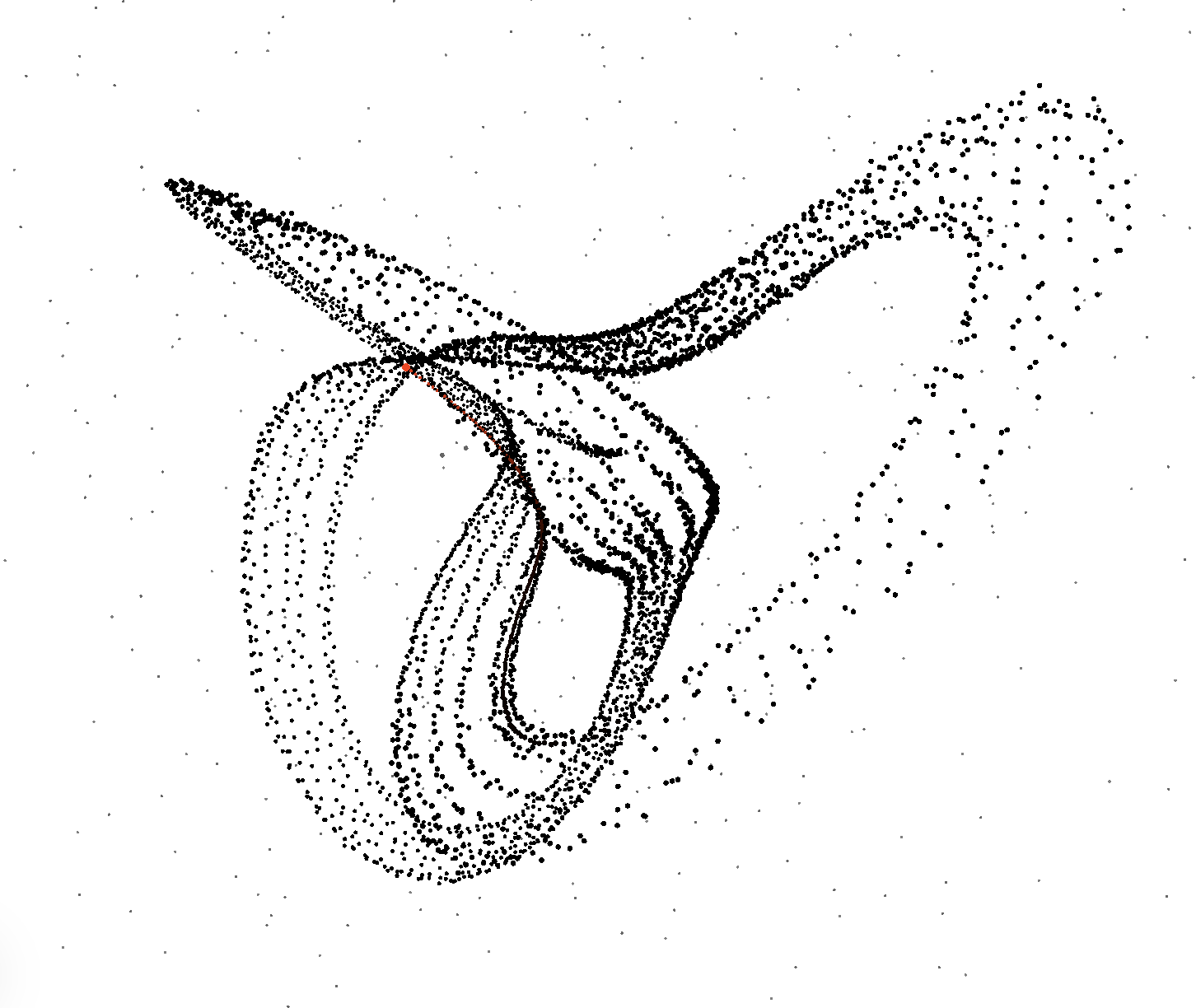
Halvorsen
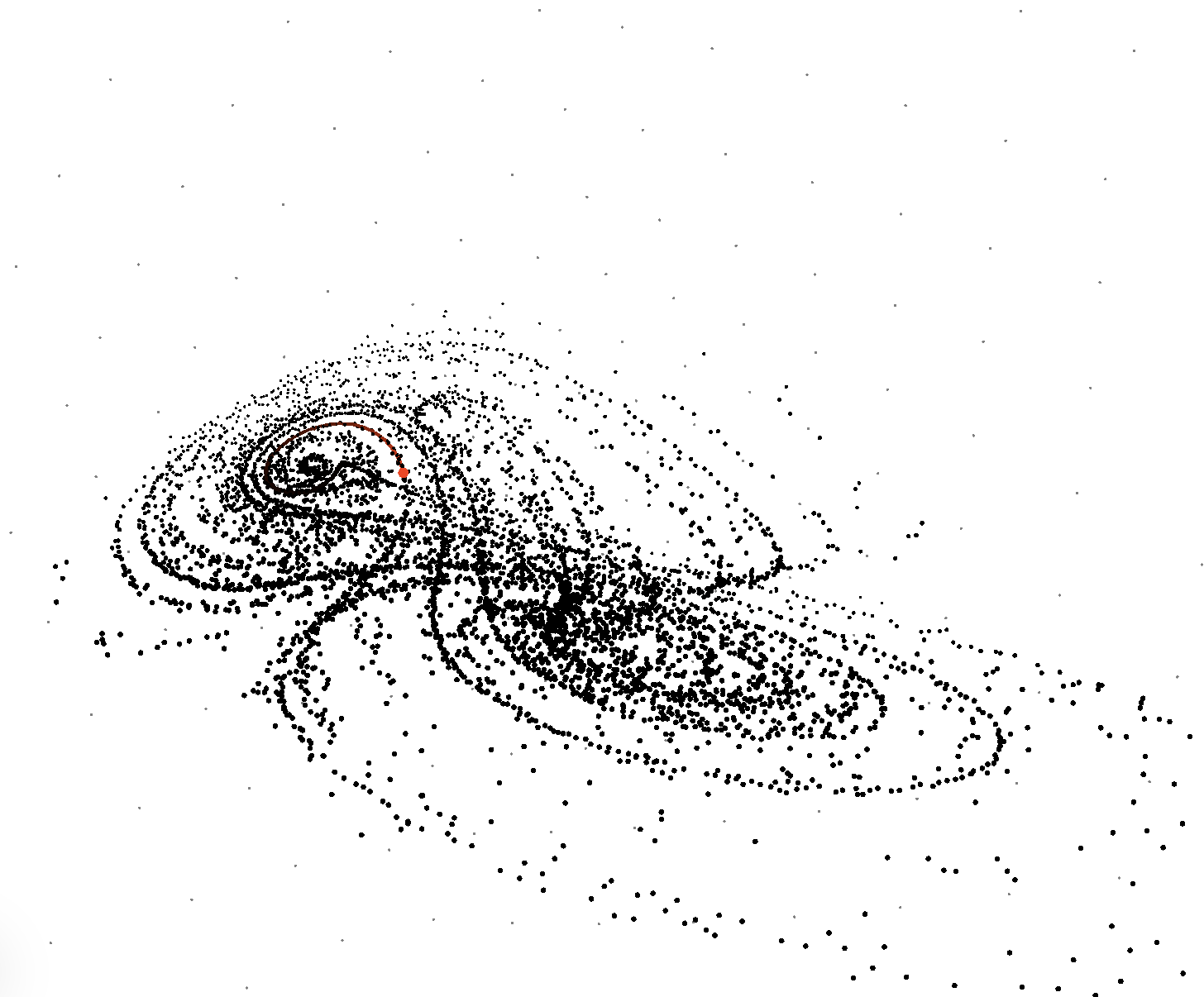
Chen
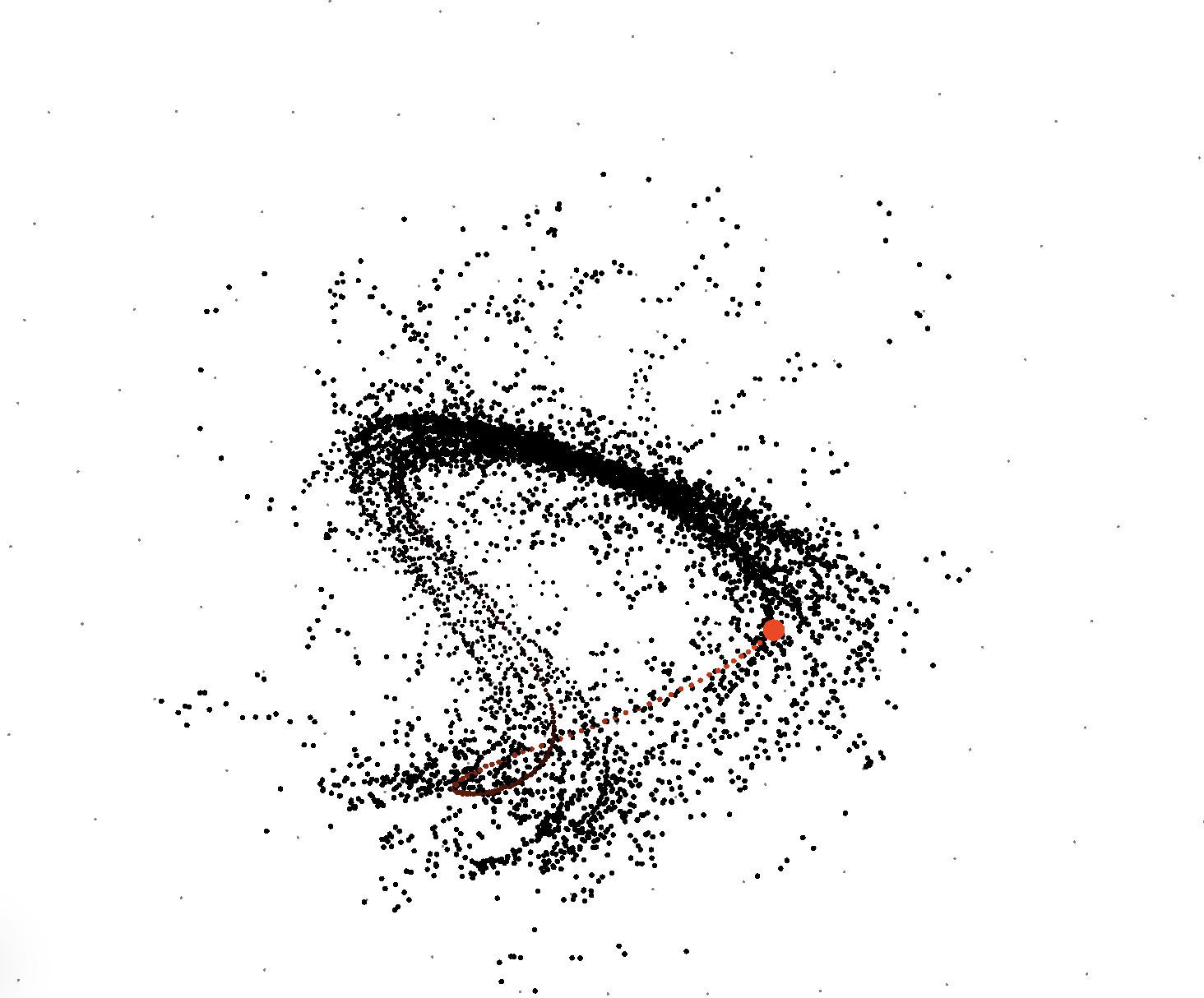
Nose-Hoover
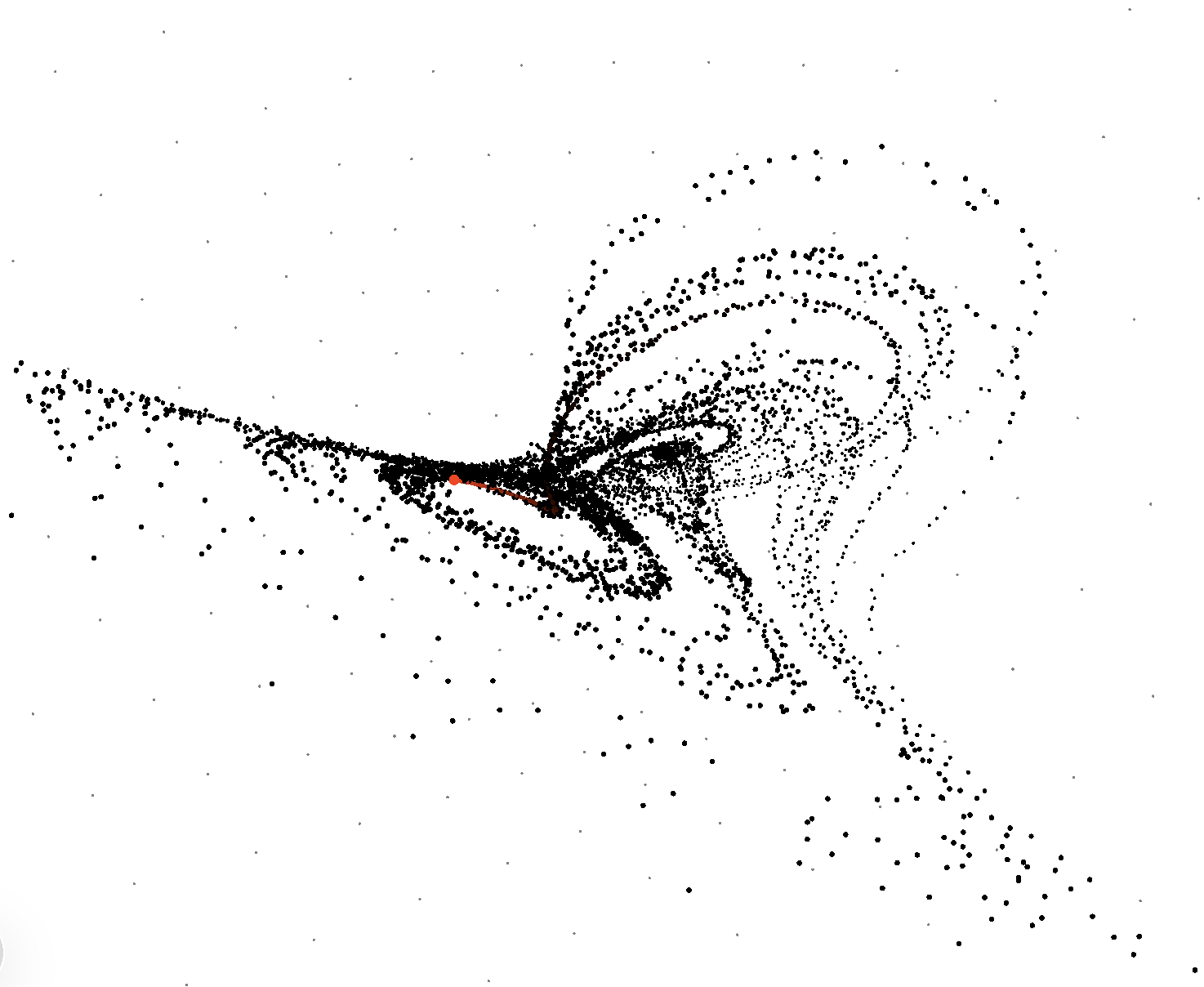
Sprott B
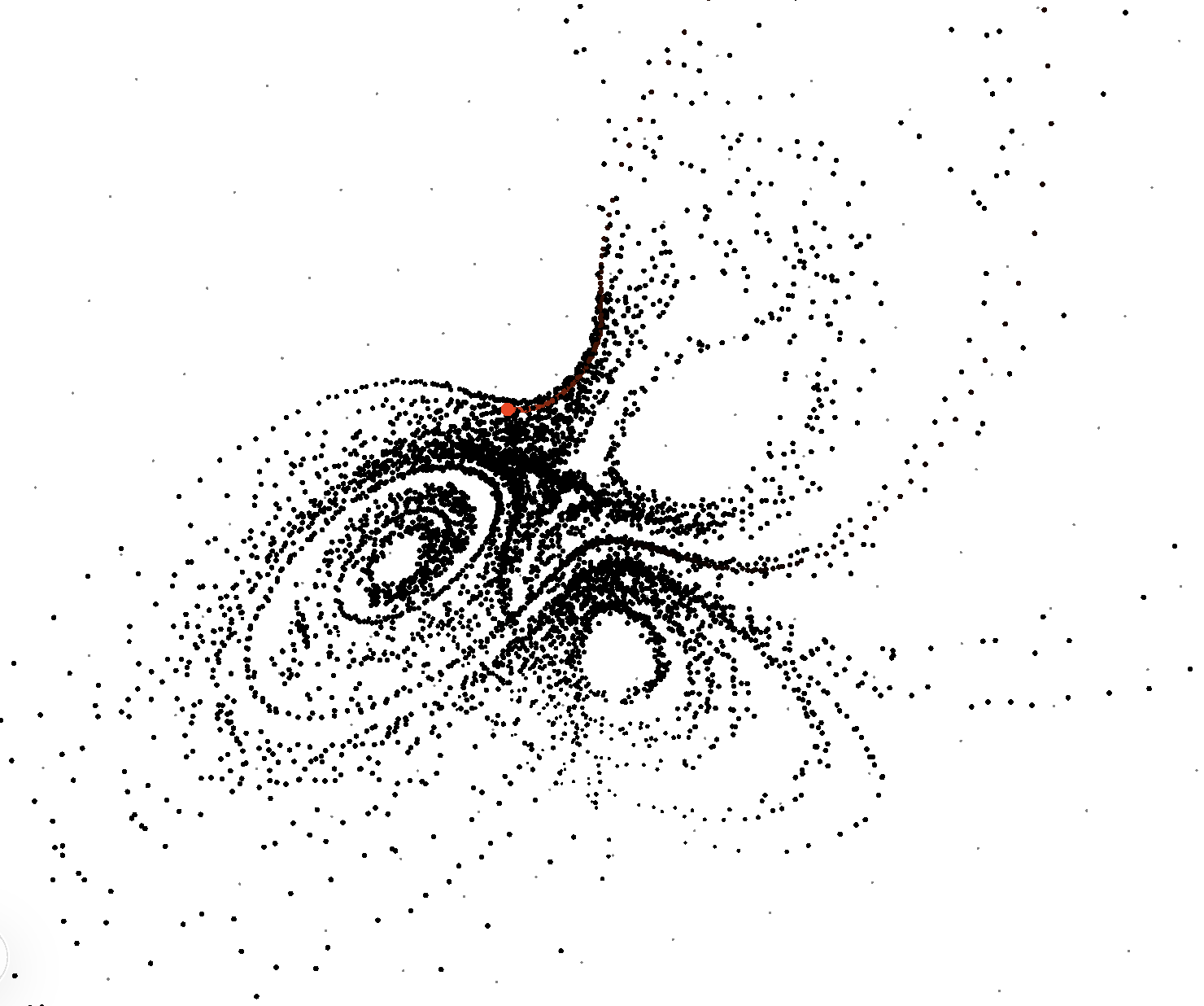
Dadras
Put it on. Plug in headphones.
Nine attractors. Spatial audio. No score, no goal, no end.